
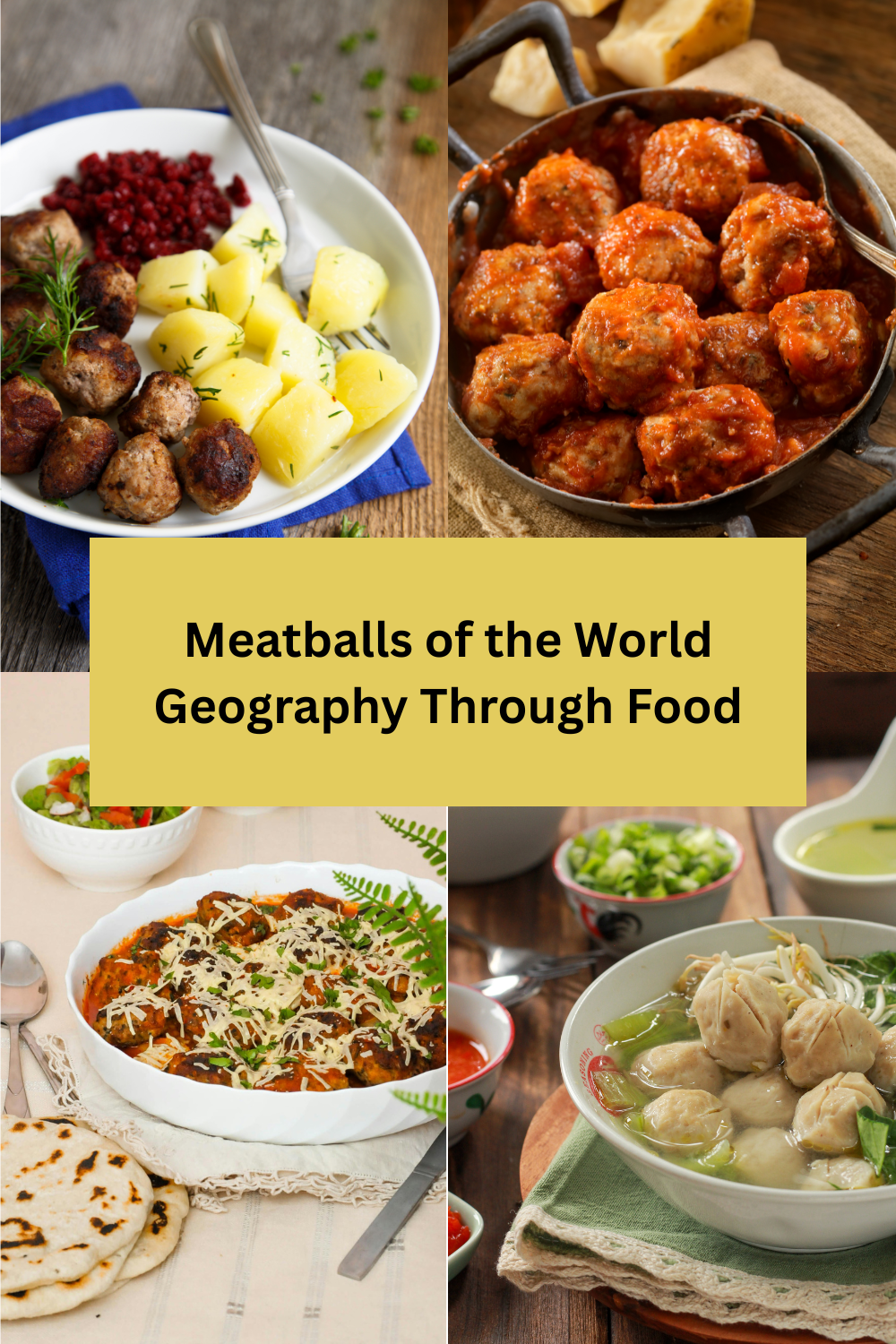
I have never believed the notion that food is simply fuel to keep the body running. Food is a major part of our culture, no matter where you’re from in the world. We connect through food. We show our love through cooking for others. That makes exploring local cuisine a fabulous way to study geography! What’s really cool is that there are some dishes we almost all have in common. Some things are so universal that they were simultaneously invented in multiple countries like flatbreads and doughnuts. One of our favorite meals in my house also falls into this list, meatballs! Let’s take a look at some famous meatballs from around the world.
Why Meatballs
One day my kids and I got to talking about the fact that there are some foods, tools, and ideas that are common across most cultures. I got curious and decided to do a little research. Did you know that most cultures have some sort of meatball recipe? What is it about meatballs that makes them so popular in every corner of the world?
- Meatballs are an easy way to either stretch a small amount of meat or make use of less than ideal cuts of meat by grinding them.
- Making meatballs is simple and can easily match each culture with different meats, spices, and binding ingredients.
- Meatballs are the perfect family meal because they are easy to make for a small group or a crowd.
A Global Dish
People connect through the passion and experience of sharing food. The spices and sauces may change from meatball to meatball. Each culture puts its own unique spin on the dish. No matter the flavor the heart of the meal, feeding our families, stays the same.
Denmark
Frikadeller are an iconic Danish meal. You can find them included on nearly every restaurant menu around the country. They are usually made from ground beef and/or pork. It was a resourceful way to make use of the lower-quality beef from dairy cows that are so common throughout the country. Usually they are a bit more rustic than other meatballs, not being perfectly round, and are pan-fried. Try this recipe with your family.
Italy
Polpette, Italian meatballs, vary widely from region to region and home to home. Every Nonna (Grandma) has her own version that her family swears is the best. Depending on what is available and preferred in each region, polpette can be made from just about any type of meat or fish, or even bread and vegetables. They are so simple that the earliest published recipe for them (from the 1800s) said they were easy enough for a donkey to make! Try these polpette the next time you’re craving meatballs.
Iraq
Meatballs are popular throughout the middle east and you will often see them called kofta, which is believed to come from a similar Persian word (kooftah, koofteh, or kofta, depending on the source) that means ‘pounded’ or ‘ground’. In Iraq, especially among the Iraqi Jewish population, Kofta Mishmishiya are especially popular. They combine rich meatballs in a sweet and tangy sauce made from apricots, tomatoes, and spices.
South Africa
My church is blessed to have several pastors who have moved to the US from South Africa. One of their wives has been particularly kind to me and I’ve loved learning fun things about her culture. When I put the call out to learn about meatballs from around the world she jumped right in to tell me about Kool Frikkadel, cabbage-wrapped meatballs from the Cape Malay community. They combine the flavors of several cuisines including Dutch and Southeast Asian.
Russia
Have you ever heard of ‘porcupine meatballs’? They became popular in the US starting around The Great Depression and are likely based on a Russian style of meatball called Tefteli. One unique aspect of Tefteli is that they are traditionally made with rice as their binding ingredient, making them an easy gluten-free dish without any need for substitutions!
Turn Food Into School
Food is a vital part of culture. It is a reflection of a group’s environment, finances, religious standards, and beliefs about what is beautiful. Learning about what people eat, and why they eat it, teaches us so much about a society. There are a few easy activities you can use to extend your exploration of meatballs into full-fledged geography lessons.
Research
Have your kid or teen choose a country to focus on. Investigate how the climate, religion, history of immigration and colonization, and other cultural factors influenced their meatball dishes. Have him/her share what was learned with friends or family.
Discuss
As a family, brainstorm what other foods are found in many cultures around the world (donuts, flatbreads, cookies, etc.). Discuss why certain foods seem to be universal and whether these common foods are the result of the spreading of ideas through immigration and colonization, or if multiple cultures came up with the same idea at the same time.
Evaluate
Cook, or read about, the various meatballs of the world. Learn about the countries and cultures they come from, then evaluate which meatball best reflects its country.
Create
Invent a new meatball recipe. What flavors are big in your area? Is there a particular animal that people like to hunt or fish for? Consider your local city, town, state, or region and come up with a recipe that matches it.
Food Brings Us Together
Isn’t it amazing how, even with our differences, food is something that can unite us as a planet? From culture to culture and country to country there are so many amazing things that we have in common. Even as we share things like foods, holidays, and beliefs, we all put our own unique spins on everything. Meatballs are the perfect example of something that most cultures of the world share, making them a perfect option for teaching geography and helping your kids and teens understand the world.


